
Beyond Belief
I was on the phone with my dad this week and we were talking about magic. Not the metaphorical kind, not the "trust the universe" kind. Literal, stage, white-tiger-disappearing, how-did-they-do-that mind-blowing magic.
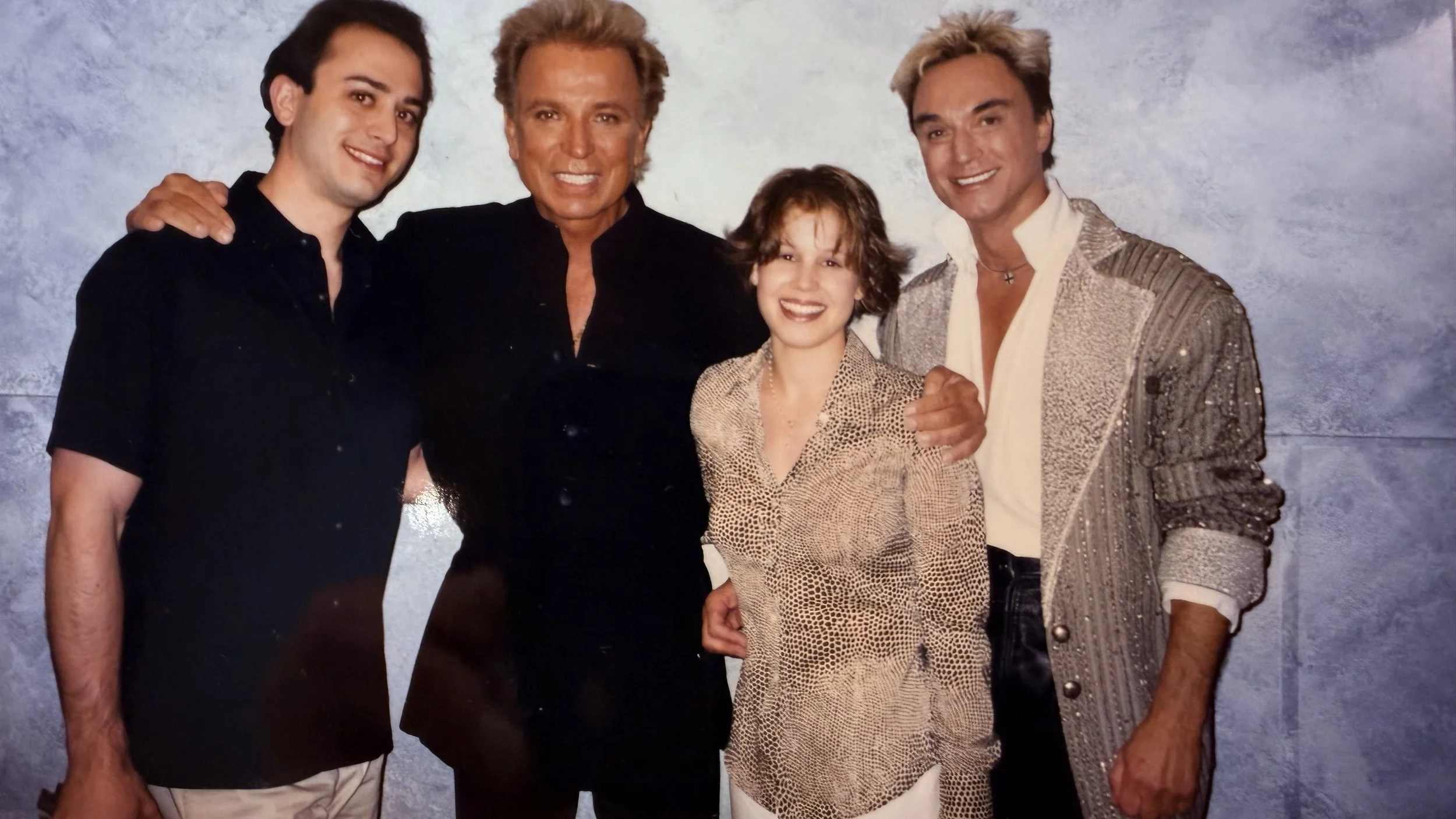
My dad produced legendary illusionists Siegfried & Roy. For anyone under 45 who may not fully grasp what that means, let me paint the picture. Siegfried & Roy weren't just a Las Vegas act, they were the reason Las Vegas became what it is. Their show at the Mirage ran for nearly 14 years and was consistently the highest grossing live spectacle in Vegas at the time, drawing an estimated 25 million people into a single showroom over 5,750 performances. They vanished an elephant and then made it reappear right in front of your eyes. They materialized white tigers out of thin air. They built a spectacle so enormous and so committed to its own impossibility that they gave it a name: Beyond Belief. They even created their own word, SARMOTI, an acronym for Siegfried And Roy, Masters Of The Impossible.
They didn't just perform magic. They lived it, breathed it, thought about it constantly, always inventing new illusions, innovating and enhancing their production. Siegfried had what you would call a magic mind and Roy could relate to animals in a way most people can't even relate to their own children.
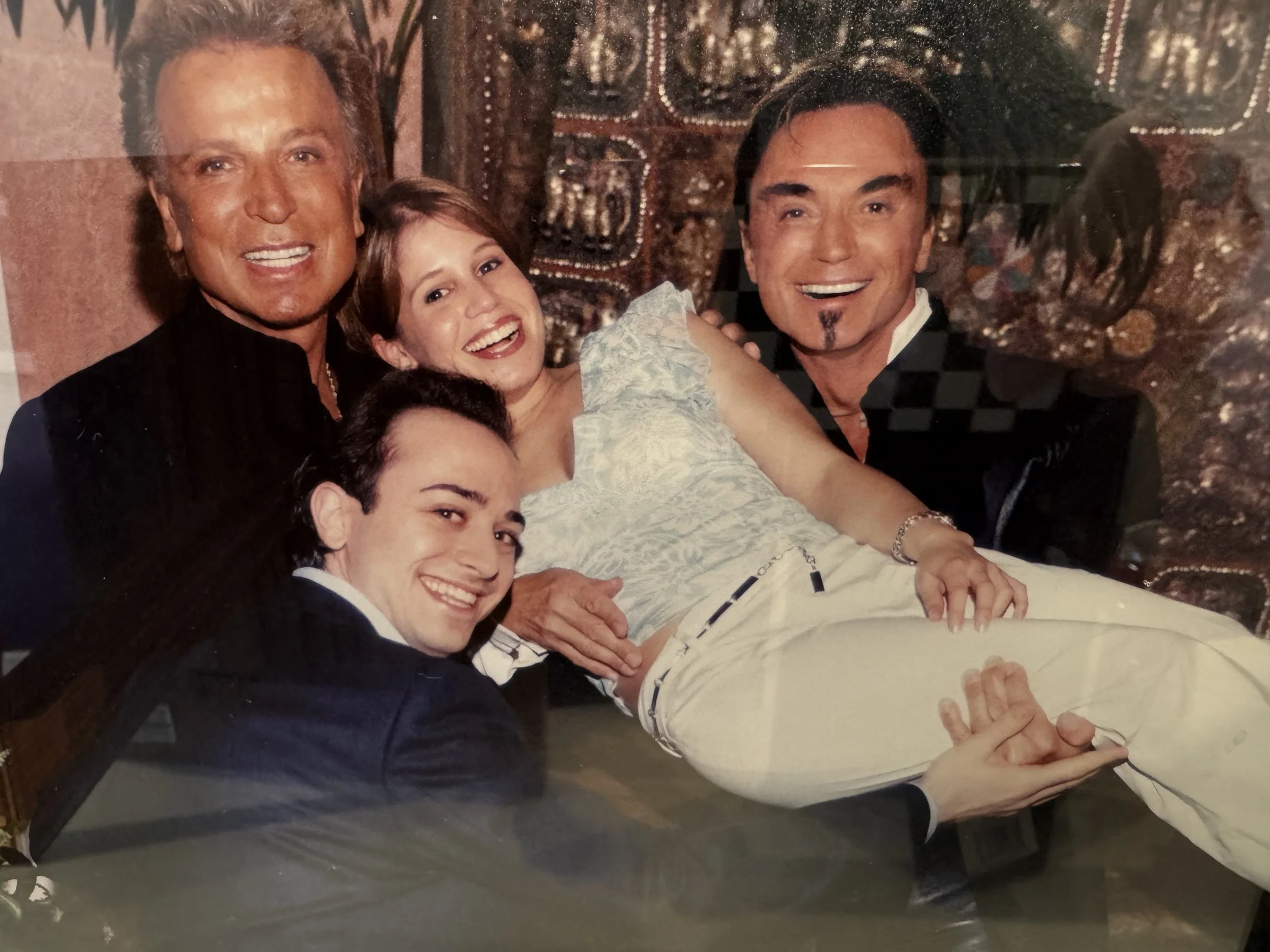
I grew up in that world. I watched their show from the lighting booth because at the time kids weren't allowed in the showroom. I spent years around these two larger-than-life icons. I never worked on their show, but I went on to produce several large-scale magic productions in arenas and on stages, working with magicians of a very different style (think Mickey Mouse, Elmo, and actually practiced prestidigitators of the human kind). Over the years, I've worked alongside countless magicians and developed a deep appreciation for the craft. The discipline is staggering. These are people who practice a single card flourish for nine hours the way a concert pianist practices scales or a surgeon rehearses a procedure. Tiny movements and invisible adjustments. Details the audience will never consciously register but will absolutely feel.
My dad and I were talking about all of this not just because of family nostalgia, but because an Apple TV+ limited series about Siegfried & Roy called Wild Things is currently filming in Las Vegas, with Jude Law and Andrew Garfield in the lead roles. My son is also deep into magic right now, and my dad had just taken my niece and nephew in Florida to see Justin Willman, the comedian-magician behind Netflix's Magic for Humans, who is touring his live show "One for the Ages." Willman is funny, warm, highly entertaining. No live animals, nothing like Siegfried & Roy. A completely different expression of the same art form.
So we had this generational span of magic in one phone call. Siegfried & Roy, who redefined entertainment on the grandest possible scale. Willman, who makes intimate close-up magic feel like a conversation. And my 12-year-old son, who is teaching himself card tricks from YouTube and practicing with the kind of obsessive focus that makes me think he might actually be onto something.
And in the middle of that conversation, my dad said something that felt so sad and also so stunningly real it stings. He said that the feeling of magic, that burning, electric sensation of watching something impossible happen right in front of you, feels like it's fading. Not because the talent has gotten worse and not because the tricks have gotten smaller, but because something else in the world around us has shifted.
As I reflect on that conversation, I think he was reacting to the fact that we live in an era that rewards deconstruction. The first instinct when we encounter something extraordinary isn't to let it wash over us, it's to pull out our phones and Google "how did they do that." YouTube is overflowing with magicians who have built entire channels around revealing secrets. TikTok and Instagram are flooded with AI-generated videos and special effects so seamless that the line between real and manufactured has gotten genuinely blurry. When everything on your feed looks impossible, the actually impossible starts to feel like just another edit. And I think that is changing our relationship with wonder in ways that go far beyond magic shows.
There is a growing cultural instinct to treat amazement as naivete, as though being genuinely moved by something you can't explain is somehow less sophisticated than figuring out the mechanics behind it. I see it in the way people talk about viral moments, the immediate pivot to "it's staged" or "that's fake" or "here's the algorithm behind why you're seeing this." I see it in the way we approach other people's success, careers, relationships. The reflexive need to deconstruct rather than appreciate, to reverse-engineer rather than simply witness.
Magic has always been, technically, a con, every trick a deception or misdirection. The card was never where you thought it was. People concede, It must be magnets or hidden cameras, or maybe the elephant didn't actually vanish, that there was a second elephant (as if that is the simpler explanation). Siegfried & Roy understood this long before the internet existed and anyone could articulate it. They weren't confused about the mechanics of what they were doing, they were rigorous, obsessive engineers of illusion who spent decades perfecting the architecture of the impossible.
What made them transcendent wasn't the trick, it was the invitation. Beyond Belief wasn't just the name of their show at the Frontier Hotel in 1981, it was a contract with the audience. Come in, sit down, and for the next 90 minutes, give yourself permission to stop needing to know.
That's the part we're losing, not the magic itself, but our willingness to accept the invitation.
Last year we took our son to Las Vegas to see Shin Lim, the card magician who won America's Got Talent twice (in 2018 and again on The Champions in 2019). Something happened in that theater that I don't think technology can replicate. Like Siegfried & Roy, Shin Lim barely speaks during the first half of his act. He performs in near silence, with every movement synchronized to music. He trained originally as a concert pianist before a carpal tunnel diagnosis redirected him toward magic. You can see the musician in every gesture, the precision, the rhythm, the way his hands move like they're playing an instrument that isn’t there.
Our son was mesmerized, not because he was fooled, although he absolutely was, but because he was given permission to be inside something without needing to take it apart. For an hour, a kid who lives in a world of constant information, constant explanation, constant access to the answer, got to sit in the gorgeous discomfort of not knowing.
That is increasingly rare. And I think it matters more than we realize.
What I know from a lifetime in this world is that once you know how the trick is done, you can't unknow it, you can't unsee it. The wonder, the disbelief, the pure beauty of that suspended logic is gone forever. Having produced magic shows and worked alongside magicians for years, there are illusions I can no longer watch with innocent eyes. I simply know too much and I can tell you with certainty that knowing the secret has never once been more satisfying than not knowing it.
The magicians I've admired most share something with the best leaders, the best teachers, and the best experience designers. They understand that the value isn't in the reveal, it's in the anticipation and trust you build before the reveal, the space where people feel safe enough to surrender their skepticism and just be present.
Siegfried & Roy created that room on a scale that may never be replicated. Audiences who came back year after year, not because they'd figured it out, but because they hadn't, and they didn't want to. They wanted to stay inside the wonder. Roy himself lived that commitment to the impossible in the most extraordinary way, after the tiger accident in 2003 left him partially paralyzed, doctors were uncertain he'd ever walk again. He spent years in rehabilitation and eventually returned to the stage with Siegfried for one final performance in 2009, with the very same tiger. Defying expectation "beyond belief" was simply how he moved through the world.
I think there's something in here for all of us, and it extends well past magic shows. How often do we encounter something beautiful, surprising, or genuinely moving, and our immediate response is to figure out why? To locate the strategy behind a colleague's success. To dissect the formula behind a relationship that seems to work. To scroll past a moment of real awe because we've decided it must be manufactured.
What if, once in a while, we just let the thing be what it is?
I am not suggesting we stop thinking critically or turn off our analytical minds. That would be naive, and this is not a newsletter about naivete. I'm suggesting that the muscle we've overdeveloped, the one that reflexively deconstructs, could use a counterweight. The ability to sit inside an experience and let it do its work on you, without needing to know how it works, is not a weakness. It's a skill. And like any skill, it atrophies if you don't use it.
My son is practicing his card tricks every night and he's getting good. He performed one for me that I genuinely could not figure out, and instead of asking him how he did it, I just told him it was incredible. He grinned so wide I thought his face might break.
That grin is the whole point. Not the mechanics, not the explanation. The grin.
Maybe this week, look for one moment where you can resist the urge to decode and simply let yourself be amazed. A performance, a sunset, a slice of strawberry rhubarb pie, a conversation that surprises you, or a person who does something you didn't see coming. Maybe just let the elephant vanish without asking where it went.
Some things are better left beyond belief.
From Your Biggest Champion,
Nicole
