
Sometimes The Road Is Paved With Gold
Not all transformation looks like progress at first. While in Japan, we spent a rainy afternoon in the rural town of Yamanaka Onsen with a local lacquer artisan. In his quiet workshop, he introduced us to kintsugi, a centuries-old Japanese practice that translates roughly to “golden joinery,” which is the art of mending broken pottery with lacquer and gold.
Before this experience, I thought I understood kintsugi. What I did not understand is the time.
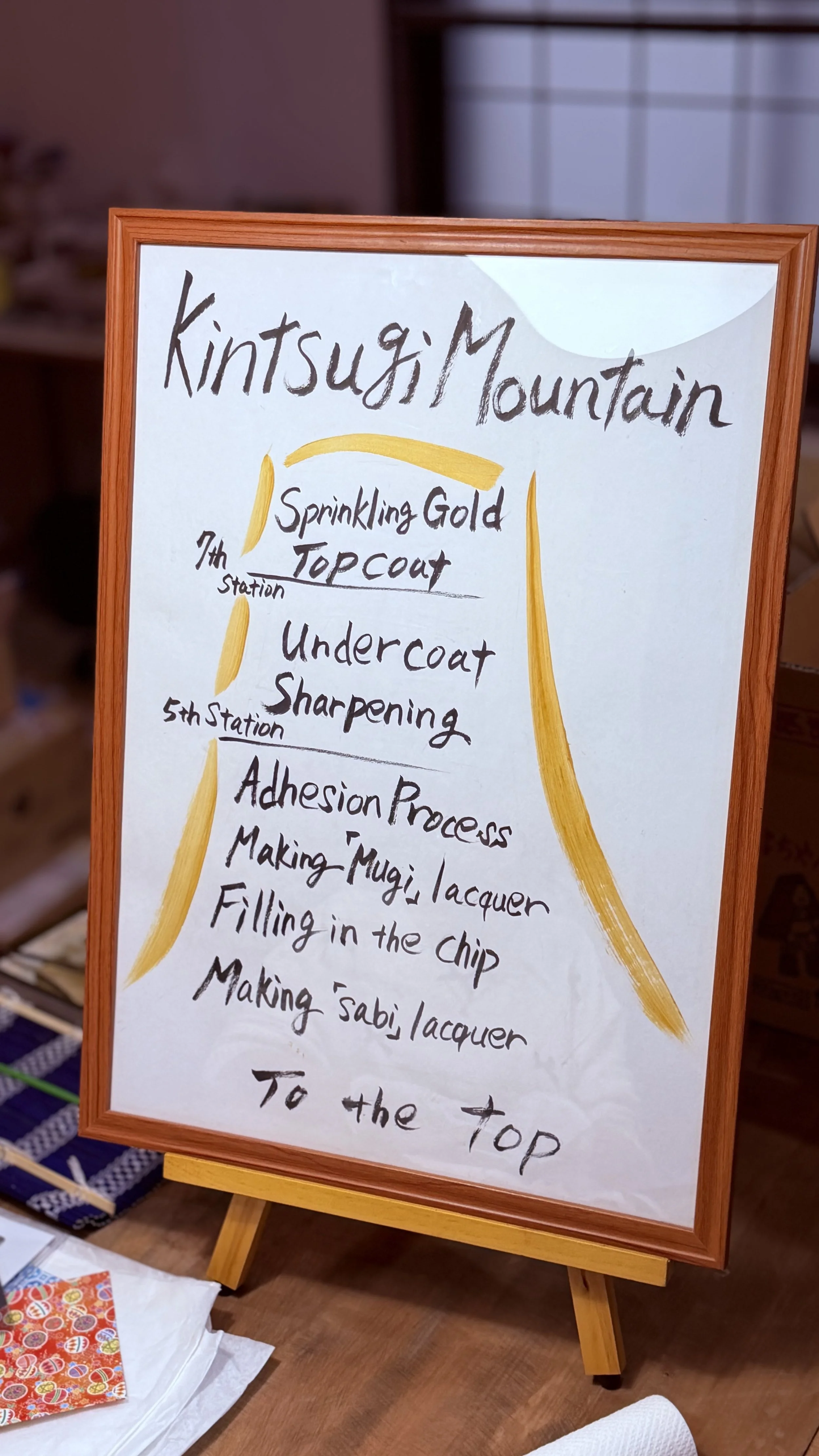
This is not a quick fix. It is not efficient. A broken heirloom can sit for weeks between steps, simply drying. Nothing visible happens, no progress you can point to. Just waiting and more waiting. Some repairs take months. Some take more than a year. Each stage requires patience, restraint, meticulous detail, and trust in work that cannot yet be seen.
This is where the collective eye roll tends to happen. Are we there yet? Is this the step where the gold comes out? No? Still drying? You mean we aren’t going to fix this plate in two hours? Cool cool cool.
The artisan explained that restoring a broken object often takes longer than crafting it in the first place. The objective with kintsugi is not to create something new, it is to rejoin the piece to itself. Same shape. Same weight. Same purpose. The bowl still holds what it always held. The original craftsmanship remains, but it cannot be put back together without acknowledging where it broke.
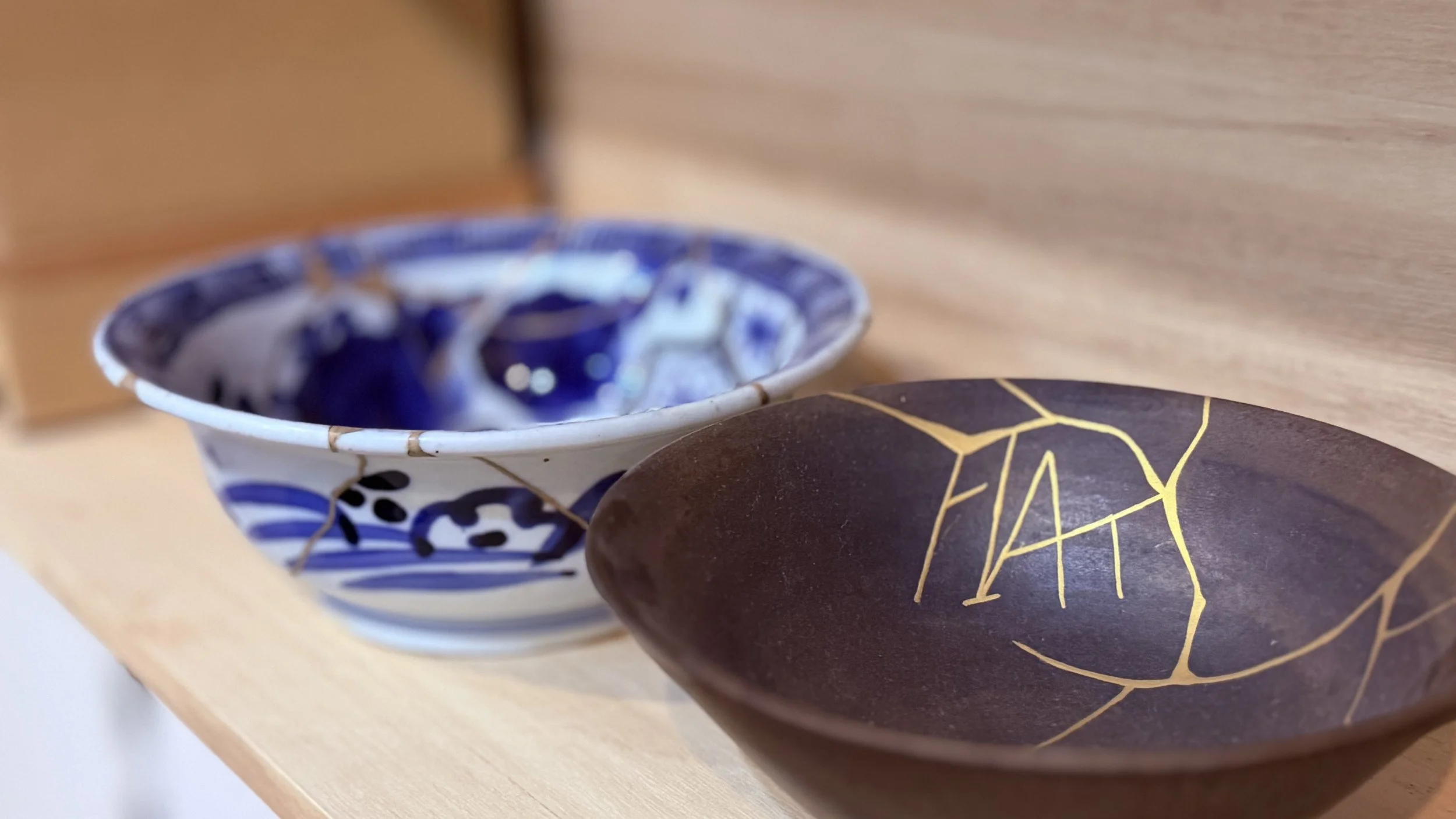
The cracks are not erased or seamlessly hidden. They are reinforced, and only at the final stage are they traced with gold. This is not to glamorize the damage, but to mark where extra care was required, where fragility existed, and where deep attention to detail mattered.
Watching this process, it is hard not to think about identity and work. About how many of us have allowed our careers and job titles to carry far more than their fair share. Not just what we do, but how we introduce ourselves, how we measure our worth, how we explain our place in the world. For a long time, one role can end up holding almost everything, without much examination of the other parts that also belong and make us who we are.
What the repair makes visible is that the work is not about discarding the original form. It is about understanding it more fully. Noticing where the structure is strong and where it has been doing too much of the holding on its own. Repair does not mean replacement. It means redistributing weight so the vessel can keep doing what it was meant to do without cracking under the pressure.
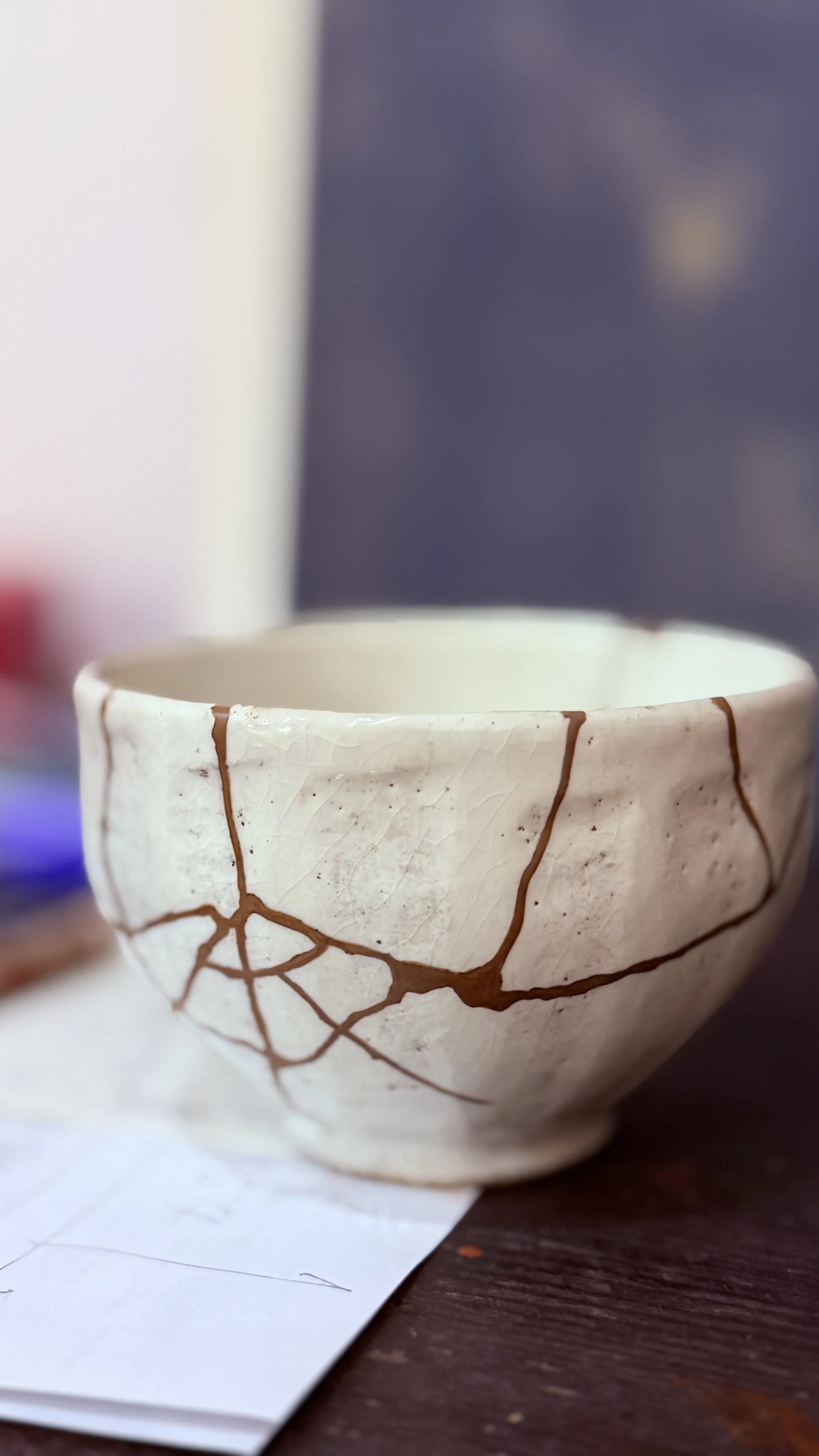
In the long in-between, there is no gold yet. Just drying time. Waiting. Sitting with questions instead of answers. Trusting that invisible work is still work. Slowly, new material is layered in. Not to overwrite what existed, but to support it. Awareness gets added, then perspective, and then a more honest understanding of our vulnerabilities.
When the piece is finally dusted with gold, it is not better because it is perfect. It is better because it is truthful. It carries its history without apology. It looks familiar, but not untouched.
That feels uncomfortably accurate to how real pivots happen.
We do not become someone else. We become more ourselves, carefully and over time, reinforced in the places life proved thin. The gold is not just decoration. It is evidence of patience, attention, discipline, and yes, a lot of waiting.
Still the same beautiful work of art. Now strong enough to carry its weight in gold.
From Your Biggest Champion,
Nicole
