
Is There A Right Way To Climb To The Top?
The hike up Snow King is just under two miles, which is the kind of number that makes you leave the house without thinking very hard about it.
The locals in Jackson described it as not really too challenging, and locals are usually right about their own mountain, so my husband Jonathan and I set out on a Thursday in running sneakers with a water bottle each. Snow King is Jackson's town hill, the original 1936 ski hill sitting right on the edge of town, close enough that you can see the summit from the sidewalk, which is part of what makes it feel so casual. Just under two miles. About 1,500 vertical feet. We would be up and down before lunch.
The trail starts as a switchback, a series of long zigzags that trade distance for grade, and it works beautifully. You climb steadily, you talk, you notice the wildflowers, you stop and look at the Tetons across the valley. Somebody figured this out a long time ago, and I mean that literally, the Civilian Conservation Corps cut a switchback trail up that mountain in 1936 and it eventually became one of the first ski racecourses there. The reasonable way up has been sitting on that mountain for ninety years. We were on it for more than half the climb.
Partway up we passed a couple, a little older than us, taking a breather on the side of the trail. We did the thing you do on a mountain, a quick friendly exchange, how are you doing, beautiful day, and then we kept moving and they stayed behind us.
Somewhere in the last third, the trail we were on stopped zigzagging and started going straight up.
I want to be precise about this because it matters. There was no fork. There was no sign, no moment where Jonathan and I looked at each other and decided to do it the hard way, no discussion about whether we were up for a challenge. We had expected the last third to get steeper, that seemed logical, and then it got steeper in a way that had nothing to do with our expectations. We were suddenly ascending directly up the face of the mountain, hand over foot, nothing to hold onto, in running sneakers, just below where the gondola cable ran overhead. In the winter when covered in snow, that pitch we were climbing is a double black diamond.
I was holding a water bottle. That is the detail I keep holding onto, literally! I was scaling a double black diamond with one hand occupied by a water bottle, because when we left the hotel we were going for a walk.
There was no clear direction toward another path. We looked, and all we could see was up.
Going back was worse than going forward, which is not something I expected to learn about myself on a Thursday morning. Looking down that face unsteadied me so badly that I stopped looking. Descending would have required looking at it, and I could not look at it, so we kept climbing, and the only sane-feeling option available to us was to continue doing the insane thing.
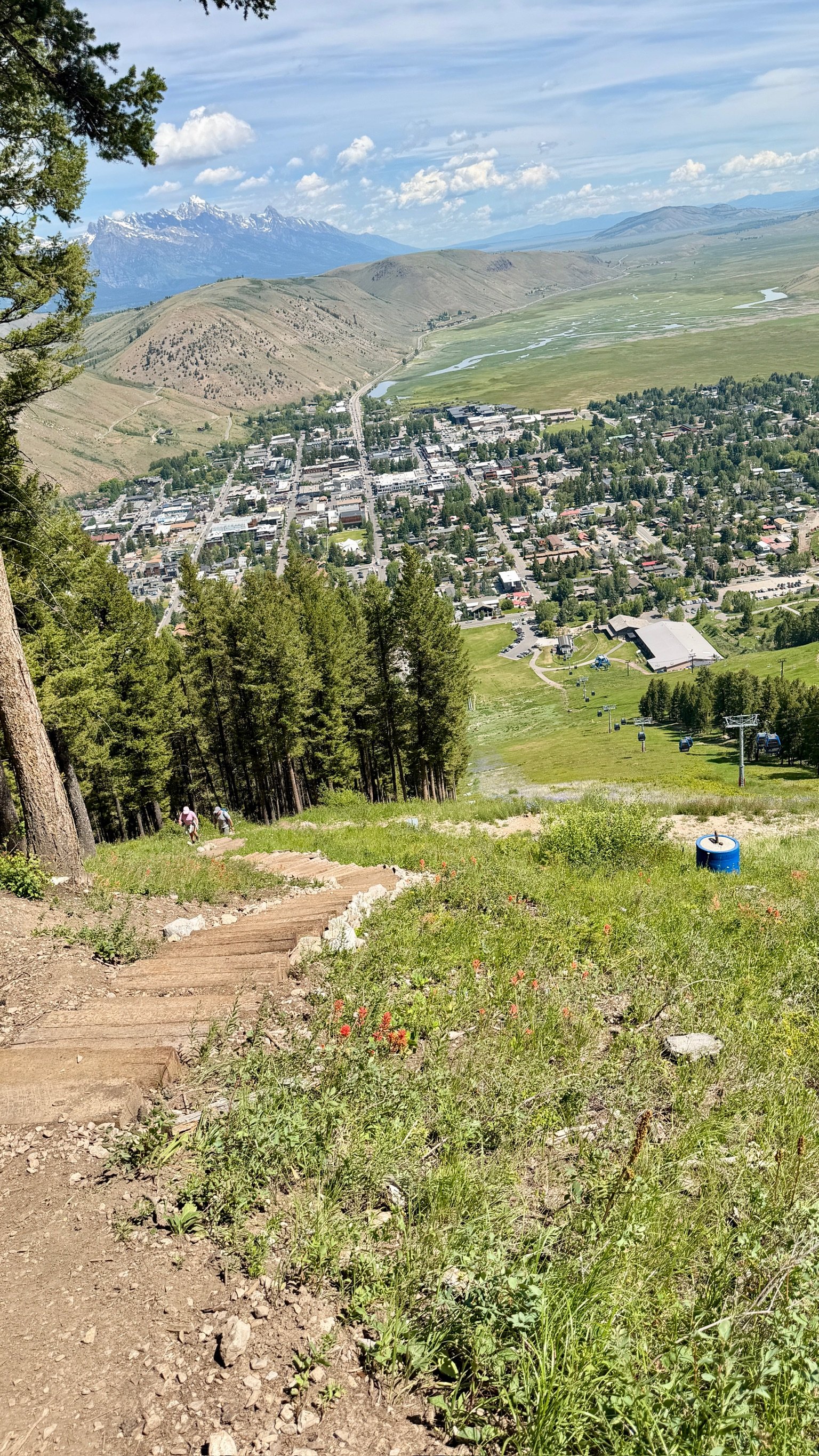
And then I glanced back and saw the couple.
They were on the same face, below us, coming up the same impossible route. The wife had mentioned a knee injury when we chatted earlier. This was not an advisable route for anyone hiking casually, and it was a genuinely bad route for a person with a bad knee, and there they were, following the line we had taken.
They were not on that face because they had evaluated it and chosen it. They were on it because we were on it. We were on it because the trail seemed to lead there. And every one of us was quietly using the presence of the others as evidence that this must be the way up.
Nobody chose the vertical path. We inherited it, one reasonable step at a time, and then we ratified it for each other. I could not turn around to check on her, not that I could do much anyway. I was worried about a woman I had spoken to for ninety seconds, and I physically could not turn my head to look, because turning to look meant looking down, and looking down meant I might come off that mountain. Concern with no capacity to act on it. Anyone who has been struggling while someone behind them was struggling worse knows exactly what that feels like.
The whole hike took us about seventy minutes, start to summit.
The first thing you see at the top of Snow King is people getting off the gondola. Families, sandals, cold drinks in hand. And people cresting from the other side of the mountain, on foot, on the trail, barely breaking a sweat, having had a nice morning stroll.
Same summit. Same view of the Tetons. Some of them took the reasonable path the whole way and some of them bought a ticket, and every single one of them was standing exactly where I was standing, with functioning knees and a normal heart rate, while I stood there vibrating with adrenaline and clutching a water bottle like it was a trophy.
We waited for the couple.
We waited thirty-five minutes, which is a long time to stand at the top of a mountain when there is a gondola right there and a cold drink at the bottom of it. I was convinced they were going to reach the summit and punch us in the face. Mostly we were just worried, and we could not leave without knowing.
When they finally came over the crest they called out to us, friendly, delighted. We hugged them. All four of us, on the top of the town hill, hugging strangers we had exchanged a few sentences with an hour earlier. They turned out to be experienced outdoors people with an excellent sense of humor about the whole thing, which means the couple I had spent forty-five minutes worrying about was in better shape than I was and found it funnier.
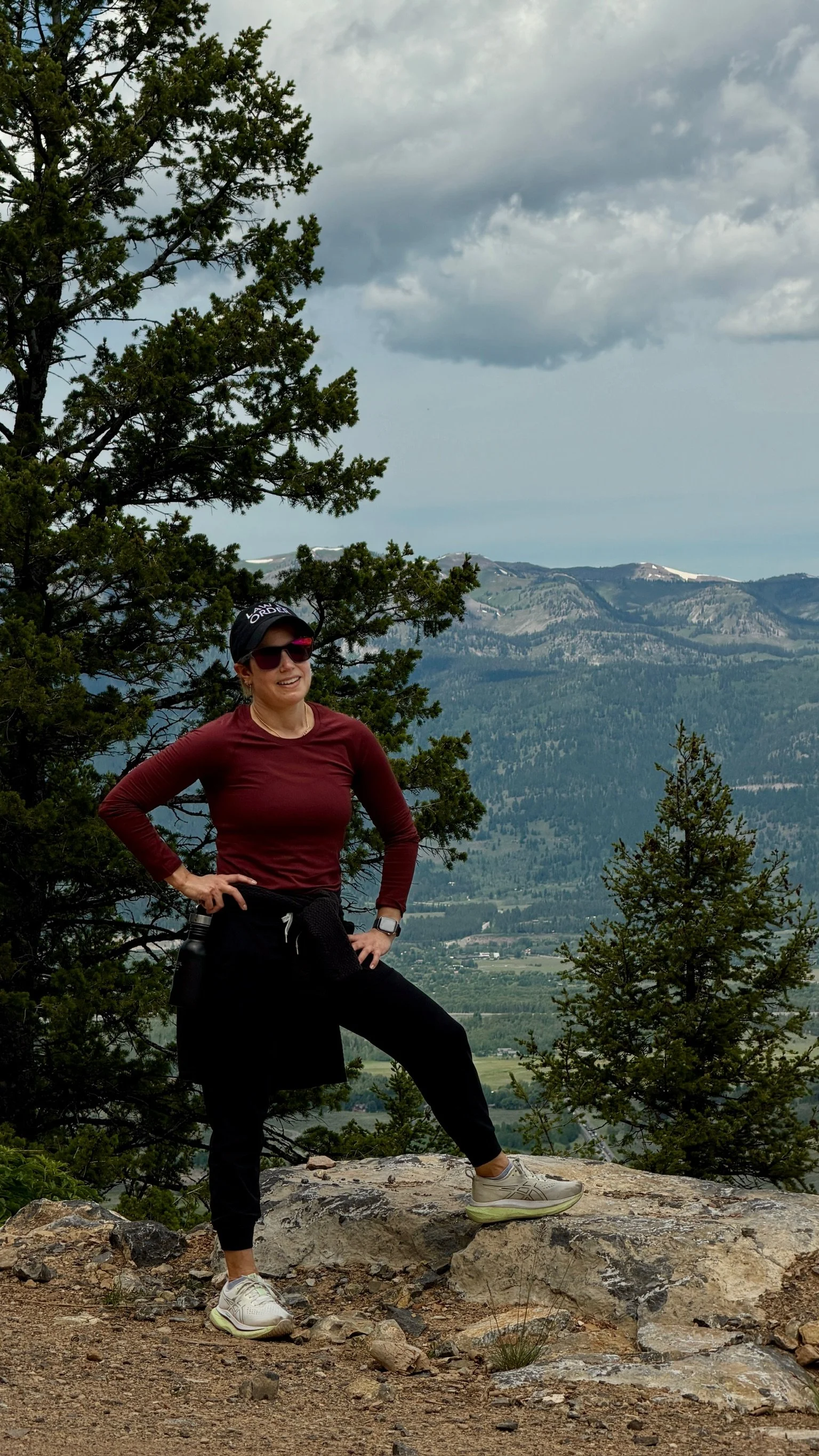
Days before this, we had been at the top of that same mountain for a concert, riding up in the gondola with food trucks and whiskey tastings waiting at the top. Same summit. Very different arrival.
I offer all of this as a question rather than a lesson, because I am not sure I have earned a lesson yet.
I do not think I chose the hard path. I drifted onto it while doing something reasonable, and by the time I noticed, turning back looked scarier than continuing. If you have ever found yourself deep into a career, a role, a relationship, or a version of your life that you cannot remember agreeing to, you know this drift is not a failure of courage, it is a failure of noticing. And the noticing is hard because the drift happens on the last third, after you have already done the sensible thing for most of the climb, which is exactly when you have the most invested and the least willingness to look down.
I did not expect to be continuing to think about the couple behind us a week later. I never intended to lead anyone up that face. I was not leading, I was climbing, and I had my own problems and a water bottle in one hand. But intention has almost nothing to do with it. Somebody was watching where I put my feet and reasonably concluded that a woman moving with confidence must know something, and the truth is I knew nothing, I was just committed. That is a humbling thing to sit with, that you can be the evidence somebody else uses to justify a route you never chose.
Most of us are following someone and being followed by someone at the same time, usually without noticing either one. The people behind you are not waiting for your advice, they are watching your feet. Your team is not listening to what you say about work-life balance, they are watching what time your emails go out. Your kids are not absorbing the lecture, they are absorbing the way you talk about your own body, your own work, your own mistakes. Confidence reads as knowledge from below, even when it is only momentum.
So the useful thing might not be to lead better, it might be to say out loud when you are not sure. If I had called down the mountain, I do not think this is the trail, I think we are off it, that couple might have traversed back to the switchback. It would have cost me nothing except the admission that I was somewhere I never meant to be, which is exactly the admission that is hardest to make while you are clinging to a rock face trying to look competent.
A few things to try on, wherever you are on your own mountain.
Ask whether the path you are on is the one you chose, or the one you inherited from whoever was in front of you. Somebody is always in front of you, and that does not mean their way is the right way or the best way.
Notice who is behind you, and whether your presence on a route is functioning as an endorsement of it. Then maybe be honest with yourself and others, I am not sure this is right, I am figuring it out too, but I know I can. That sentence is worth more to the person behind you than any amount of confident silence.
Remember that other people are reaching the same summit by a route that is not harder or nobler, just better designed. The switchback has been there since 1936, and taking it would not have made the view less beautiful.
And when someone tells you it is not really too challenging, consider that they may be telling the truth about their own experience of it, on the path they know, in the shoes they own.
We took the gondola down. I have no regrets about that whatsoever.
From Your Biggest Champion,
Nicole
