
Eating Was Never The Point
The meal from our very first night in Crete ended the way so many would in Greece, with a stranger handing us a small carafe of liquor and then refusing to bring the check.
We had landed in Crete to start a two-week family trip, and we were at the kind of taverna where the menu is more of a suggestion and the owner's opinion is the actual menu. We ate well, the plates were cleared, and in the lull where, anywhere at home, a server would materialize with the bill and that small bow of finality, something else happened instead. A small unmarked bottle landed on the table with a few shot glasses and a dessert nobody ordered, gratis. The owner poured one for us and then himself, raised it, said "Yamas," to our health, and then he walked away.
That was it, no check, no hovering, no plates whisked off to telegraph that our time was up. Just us, a potent digestif, and an evening with no edges. The bottle was tsikoudia, which much of Crete just calls raki, a clear grape-pomace spirit distilled from what's left after the wine is made, strong enough to make your eyes water and your ancestors proud. It happened our first night and it kept happening, and over the two weeks that followed I slowly came to understand what it meant, which took me embarrassingly long for someone who supposedly understands human experiences.
My children found it maddening every single time. They had finished eating. The mission, as they understood it, was accomplished. Why are we still here? Can we please get the bill and go?
I spent a lot of years producing live experiences for a living, which is mostly the work of deciding what an audience feels and when. So I want to tell you that I recognized what the taverna was doing right away, but the truth is my own kids asked the question that made me see it. Because the honest answer to "why are we still here" is the entire reason any of us gather anywhere, and most of us have forgotten it.
The eating was never the point, the eating is the occasion, not the objective.
The Greeks have been clearer about this than anyone, for longer than anyone. They gave us the word symposium, which we now waste on stuffy academic conferences, but which originally meant, quite literally, to drink together. The symposium was the part of the night that came after the meal. The food was cleared, the wine came out, and people talked. Ideas, arguments, gossip, poetry, the unhurried business of being a person among other people. The meal fed the body so the conversation could feed everything else. That bottle of raki landing on the table was not slow service. It was the owner drawing a line between dinner, which was over, and the actual event, which was just beginning.
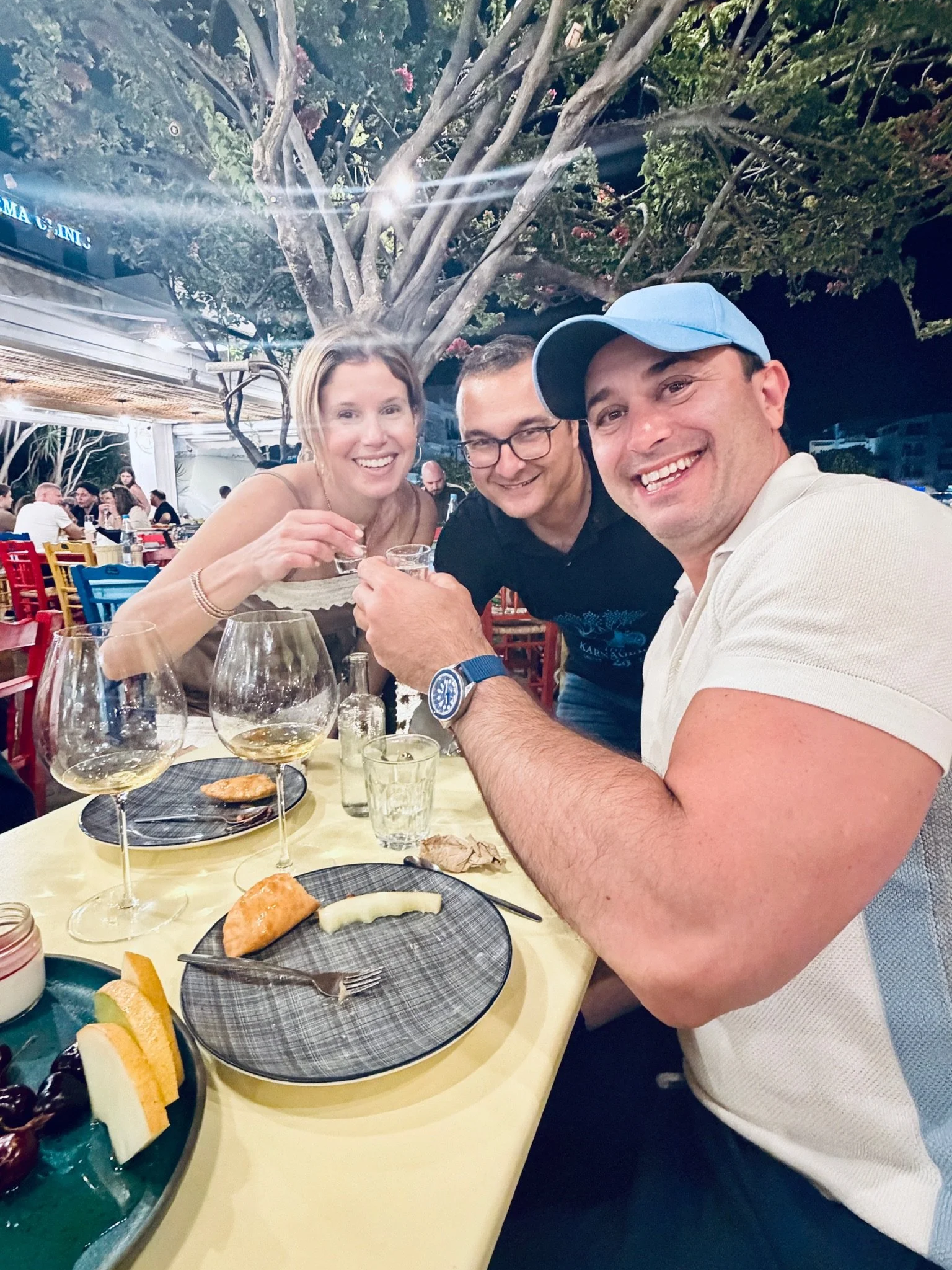
This is the part of hospitality that does not show up in any operations manual, and it's the part I find myself thinking about most. Anyone can plate beautiful food. The harder, rarer skill is designing the feeling around it. The pacing, generosity, the deliberate creation of time. The taverna fed us fast when we were hungry, because a starving child is nobody's idea of a good evening, and then fed us slowly once we were full, because a satisfied table is the beginning of something, not the end of it. That is not casualness, that is a deeply considered sequence, refined over centuries, disguised as a guy who just felt like bringing you a drink.
What makes it work is that the choreography stays invisible. Nobody at that table felt managed. We felt welcomed. The whole apparatus of the evening was bent toward making us forget there was any apparatus at all, which is the highest form of the craft, the version where all the engineering vanishes and what's left just feels like warmth.
I'll admit the contrast sharpened for me because of a coincidence of timing. The same stretch of days I was learning this on a Greek island, I was on my phone booking a special-occasion dinner back home in New York, and the app informed me our table had been allotted a window. Arrive within fifteen minutes, vacate in one hour and forty-five, a twenty-five dollar cancellation fee per diner in the party. The reservation was managing me before I'd left for the airport. I don't think the people who run that restaurant are villains, and turning tables is a genuine problem I don't pretend to be above. But the difference wasn't really about minutes. It was about who the evening was designed for. One room was built around what the guest would feel. The other was built around what the room needed from the guest, and asked us to feel grateful for the privilege of helping.
You can sense the difference in your body the second you walk in. We all can. We just don't always have language for it, so we call it ambiance, or vibe, or we say a place has good energy, when what we're actually responding to is whether someone decided in advance that our experience mattered more than their efficiency.
I think we have quietly let dining drift toward the photogenic and away from the human. The plating is more inventive than ever, the rooms more designed, the whole production more eminently postable. None of that is bad, but it's the set, not the play. The original assignment was never the food. It was the gathering, the swapping of stories, the chance, if you're lucky, to be pulled into a culture that isn't yours and shown how they do it. A bottle of raki and an empty stretch of evening is a culture telling you, without a word, that it would like you to stay.
So the next time you're choosing where to gather with people you've actually been meaning to talk to, it's worth noticing which kind of room you're walking into. The one quietly counting your minutes, or the one that lost count on purpose. Both will feed you. Only one of them is actually inviting you in.
I already know which one I'm flying twelve hours back toward.
From Your Biggest Champion,
Nicole
