
Looking Forward To Looking Back
Last Saturday, we took our teenage daughter to Coney Island. She kept saying, all day, what a fun day it was, and she meant it. Her observations along the way were still honest and a little unsparing. Parts of the park felt run down to her, old and tired, a stark contrast to her slick Six Flags days with her friends earlier this summer. My husband and I couldn't really argue. The rides were jerky. I bruised my thigh on a ride called The Tickler, which is a lot of irony for one thigh, and he walked off the Steeplechase coaster rubbing his neck. The log flume soaked me so completely that my socks squished for the rest of the afternoon. Somewhere along the boardwalk we passed a cluster of seventy-somethings in bikinis and swimsuits, blasting a stereo and dancing like it was still the 1970s and not a tube of sunscreen in sight. Our daughter's face was a whole essay and I couldn't stop smiling at them.
Everything she listed as a contrast was exactly what I loved. No fast passes, a little seedy, not entirely unsafe but maybe a touch unsavory, sideshow banners promising curiosities I didn't need to go in and see because I've seen every kind in my lifetime, the real and the contrived. At Coney Island Luna Park, we weren't chaperoning, we were participating, holding that scary excitement of not knowing exactly what a ride was going to do to us. When the smell of funnel cake found me, suddenly I was decades back at a state fair scouting acts, holding a deliciously hot plate of fried dough, taking a first bite that came with a cough and a sputter of powdered sugar. We stood in the same Coney Island, she saw tired and I saw treasure. The park didn't change between our two sets of eyes, so the difference had to be something each of us carried in.
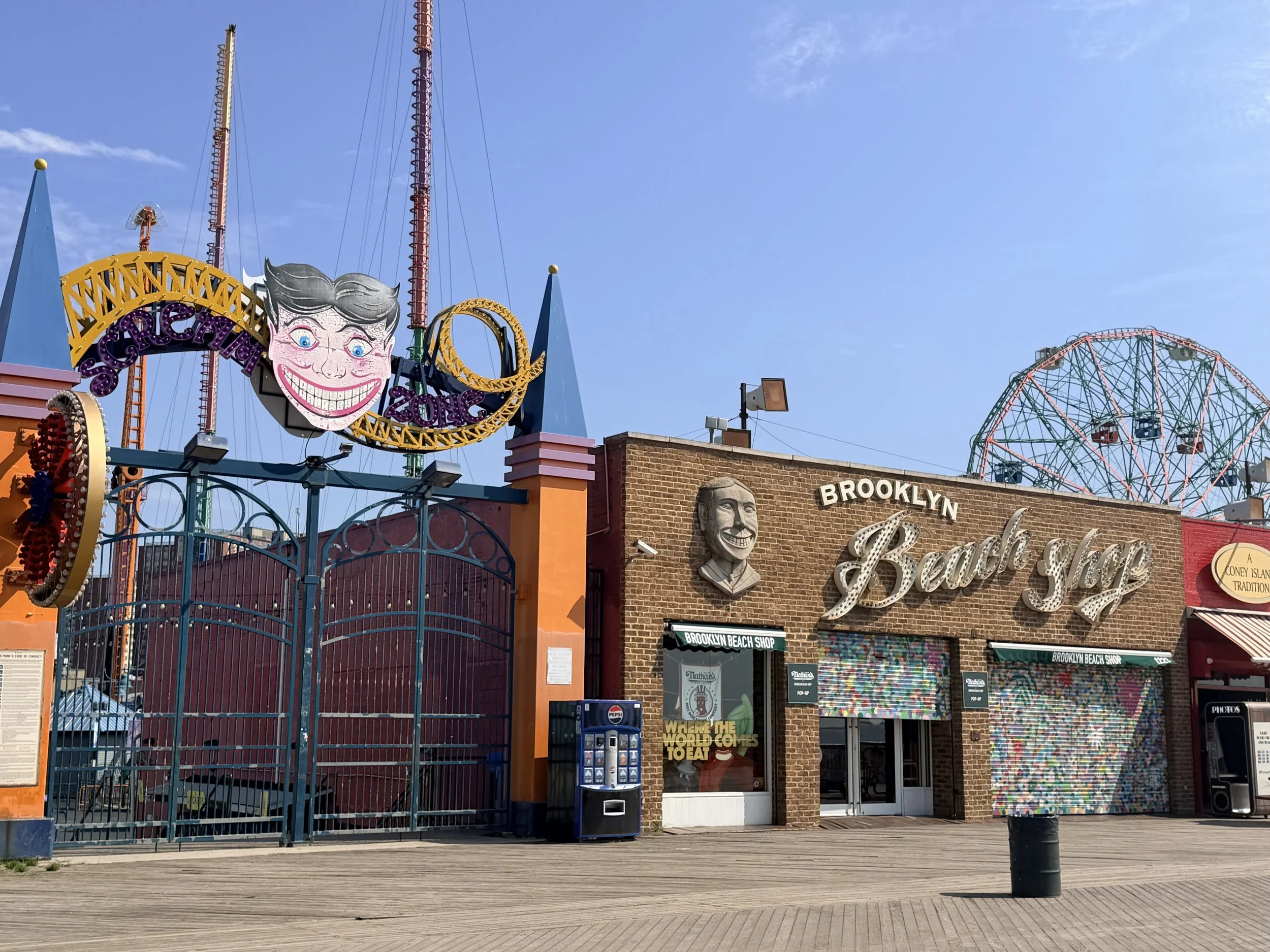
The word nostalgia has a stranger history than most people realize. In 1688 a Swiss medical student named Johannes Hofer coined it from the Greek word "nostos," meaning the return home, and "algos," meaning pain. For more than a century doctors treated nostalgia as a serious illness afflicting mercenaries stationed far from home, and the most reliable cure on record was simply sending the soldier back. The word literally means the ache of wanting to return.
Some of my ache for Coney Island is lived. While studying photography in college, I rode the subway out there regularly to shoot photographs, chasing frames on the same boardwalk where Bruce Gilden had photographed the sunbathers and sideshow characters for twenty years. His images live in my head next to my own contact sheets, which tells you something about how memory gets installed. Some of it you capture yourself and some of it arrives through other people's lenses, from photographs and movies, from stories your parents and grandparents told, until you hold vivid memories of a Coney Island you never saw. Then in the summer of 2009 we brought Ringling Bros. there in a tent, a one ring show called the Coney Island Boom-A-Ring, pitched just west of the minor league ballpark before Luna Park had opened. Running a circus by the sea while the Cyclone rattled a few blocks away remains one of the wilder chapters of my producing life, and I can tell you from the inside that a circus sells what the boardwalk sells. Nobody needs popcorn or cotton candy or a spinning light on a stick. The feeling of it all opens people up, enhances the sense memory, and the souvenir is how they take a little of it home.
There's research on exactly that. A 2014 paper in the Journal of Consumer Research ran six experiments and found that people who were feeling nostalgic held their money more loosely and were willing to pay more. The mechanism turned out to be social connection. Nostalgia made people feel less alone, and people who feel connected loosen their grip on their wallets. That funnel cake smell wasn't marketing to my appetite, it was making a withdrawal from an account I opened at the many state fairs I had visited in my past.
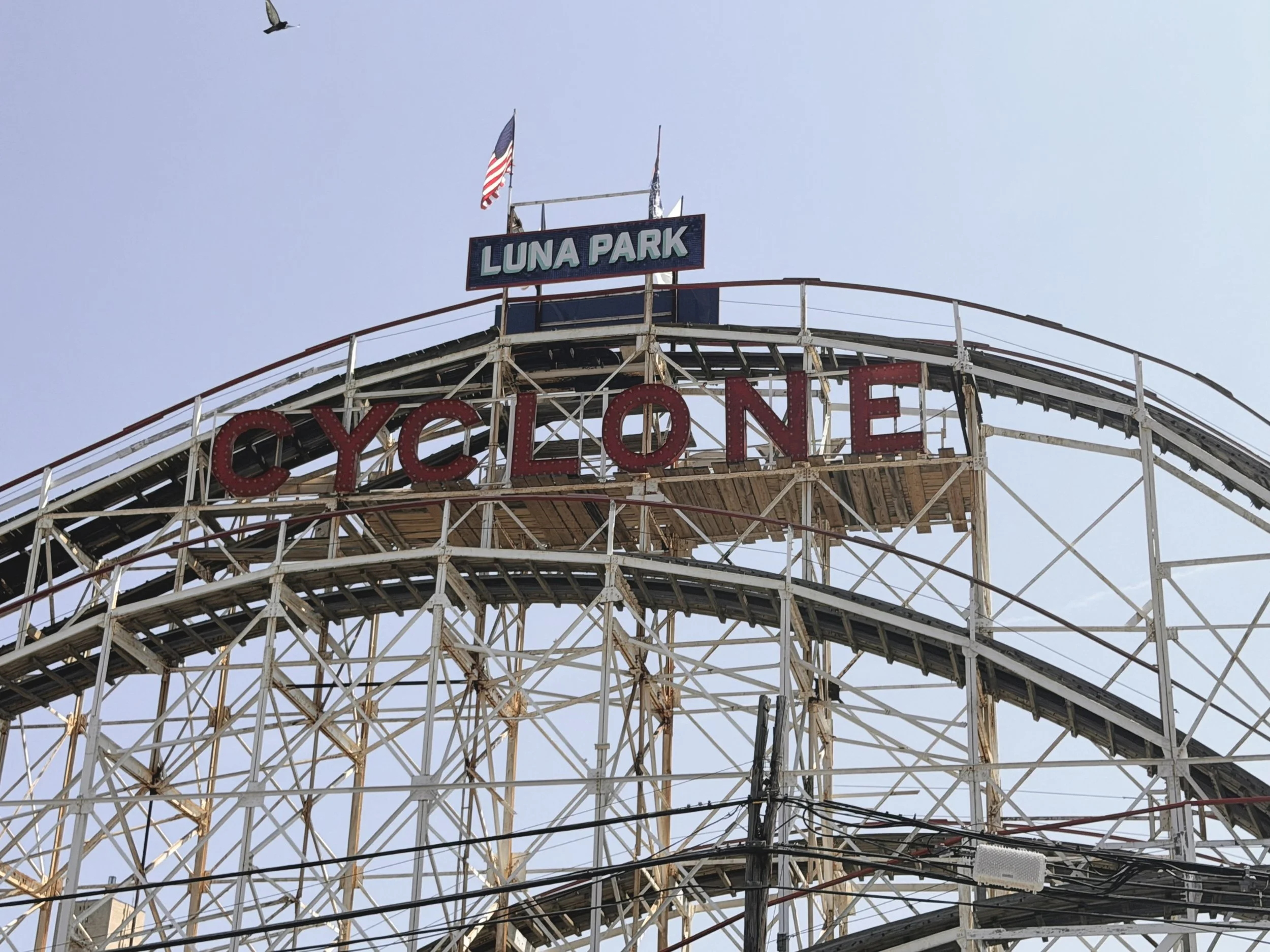
Our daughter walked in with a single faint memory from a visit when she was small. Her account was nearly empty, and the park was asking her to feel something she had no way to feel yet. I think that's the honest answer to when nostalgia works as a strategy and when it falls flat. It only pays out against memories the guest already holds, whether they lived them or inherited them. The elderly dancers who stopped her in her tracks were simply people whose accounts on that boardwalk run fifty years deep, still making withdrawals on a Saturday afternoon. Luna Park understands this down to its ride names. "The Tickler" ride that bruised me is a modern coaster christened after a 1906 ride that jostled my great grandparents' generation down a curved track, and the "Steeplechase" nods to the mechanical horse race that once defined the place. When a brand reaches into the past for an audience carrying the right memories, the effect is real and measurable. When it does the same for an audience holding none, the reference summons nothing. Sometimes it just looks like a place that hasn't been painted in a while, or worse, gives the modern attendee a feeling of lack of relevance.
The durable version of the strategy has nothing to do with referencing yesterday. Psychologists have a name for the feeling I had while barely holding my composure on the pirate ship ride, watching our daughter light up across from me while I fought my own stomach and understood, mid drop, that I was going to miss this exact moment someday. Researchers call it anticipated nostalgia, the idea of looking forward to looking back. People who feel it savor their experiences more deeply, and feeling it before a major life transition predicts richer nostalgia afterward, along with greater meaning, connection, and self-esteem on the other side. The ache and the sweetness arrive together, and they help you cross.
Every generation makes new deposits in the same sand, which is how a place like Coney Island survives a century. Our daughter made hers this weekend, and it's already forming in her. Someday a place will feel run down to her kids while she defends it with her whole heart.
So this week, if you find yourself somewhere good, try looking forward to looking back. Notice the moment that will become the memory, then fund it a little. Stay for the last ride. Buy the ridiculous snack. If you build experiences for others, in an arena or a classroom or a conference call, the same suggestion applies. Yesterday belongs to the people who were there. Today is the only account you can actually fund.
My socks eventually dried and the bruise has begun to fade. The deposit cleared before we even got back to the car.
From Your Biggest Champion,
Nicole
