
Same City, New Show
Our daughter stood with the teen choir at our synagogue this weekend and opened Rosh Hashanah services with a song called "We Return." She was days into high school, on the same campus she has walked onto since she was small, now with a new schedule, new teachers, and a hallway of students both familiar and strange. She sang about returning in a week that only slightly resembled the school life she left in June. I sat in the fifth row and did not try to make sense of it. I just watched her, proudly.
For twenty-four years, the first weekend of September meant opening a brand new show in Orlando. Disney On Ice has premiered there around Labor Day for as long as I can remember, following two months of all-encompassing rehearsals in a town not far away. By the time we opened, the kids in Orlando had already been back in school for nearly a month. Florida starts in August. We were the last thing in town still in rehearsal. This year was no different. Feld Entertainment, my family's company, debuted our latest production last week. Labor Day in Florida also sits near the peak of Atlantic hurricane season, a fact you come to respect once you have watched a storm track creep toward your opening on every TV and monitor from every vantage point in the building. More than once we cancelled an opening night because of weather, and we did it without a second thought, because nothing on a stage is worth the safety of an audience or the cast and crew. In my whole career, that was the only thing that ever moved the date. Not nerves, not a sales number that hadn't landed, not an injury, not a production detail we missed, and not my own sense of whether the show was where I wanted it to be when a paying audience arrived. A storm moved it. Nothing else did.
I used to resent that immovable date, even as I accepted it without question. Somewhere along the way I understood what it was giving me. Because the weekend never really changed, the city never changed, and the building never changed, every September became a return rather than just another opening. The crew came back to the same loading dock, families in Orlando came to expect a new production. We were establishing a tradition. The fixed date is what made it possible to notice all of that. If the opening had floated to whenever we felt ready, there would have been nothing to return to, only a series of starts.
This whole stretch of the calendar works the same way, and this is why it lands on all of us with such force, whether your kids went back in mid August or the day after Labor Day. The first day of school falls on a date nobody in your house picked. The Jewish holidays come by a calendar far older than any of us. The invitations fill the evenings, and in New York you can be wanted in four places on any given Tuesday evening. None of it asks whether you are ready. The season arrives the way weather arrives, and the only real choice left is what you carry into it.
Everyone calls this a return to schedule, as if the schedule were a house you left in June and are now unlocking, pulling the plastic off the sofa. Kids back, routines back, people back online requesting your time and response. Going back. I have never experienced it that way, and I don't think you have either. Summer was not an absence. Nobody I know took the season off completely, it just ran at a different speed, with later dinners, looser edges on the workday, a different kind of leisure folded into ordinary weeks. Changes happen at that speed too, and you mostly don't feel them while they're happening. You read something, lost something, changed your mind about something, watched a kid grow an inch. Then the constructs of fall put you back in front of the same rooms and the same people on a date you didn't choose, and the change finally has something to register against. Going back assumes the room is unchanged and so are you, but returning assumes neither. The fixed date is what lets you tell the difference.
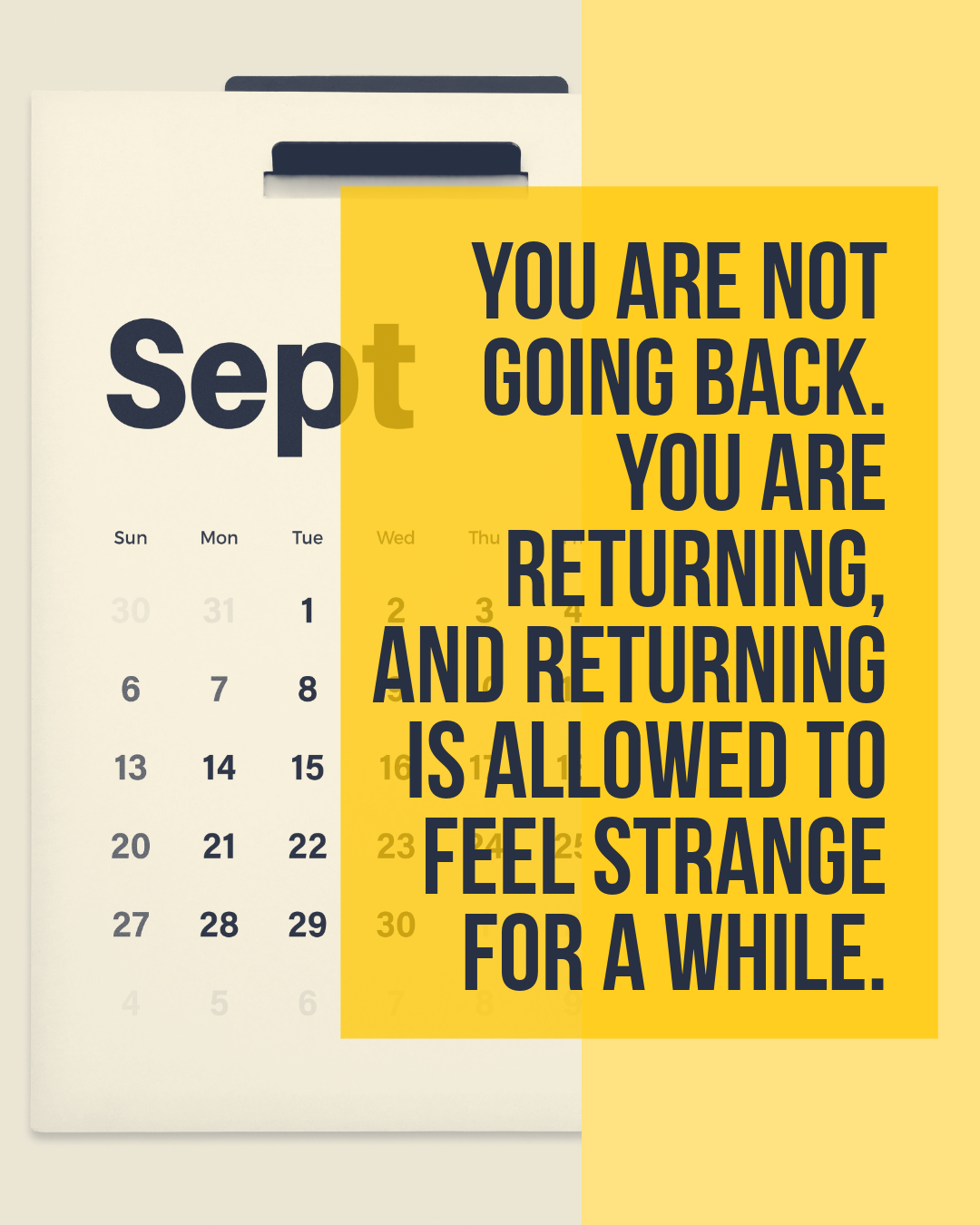
The Jewish calendar has known this for a very long time, and this week lands inside its version of it. Tradition holds that the year is written on Rosh Hashanah and sealed on Yom Kippur, with ten days in between. The work of those ten days is called teshuvah, and the word means return. It does not mean go back. The tradition is careful about that. It asks you to come back to your people, your commitments, your better self, and it assumes you arrive changed, or there would be nothing to do.
This is what my daughter was singing without knowing it. The Hebrew at the heart of the song is a verse from Lamentations that asks, in one breath, to be turned back and to have our days made new. Return and renewal are not two separate requests in that line. They are one. She could not have named that, and she didn't need to. She had walked onto a campus she has known most of her life and found it new, on a date the school picked, as a slightly different person than the one who left it in June. When she opened her mouth to sing she was completely sure of the notes. She understood both halves of that line in her body before anyone taught her the words for them.
So if this September feels less like a homecoming than it was supposed to, I would offer you a different reading. You are not going back. You are returning, and returning is allowed to feel strange for a while. A few things that have helped me when the season comes at full speed is to notice one thing that changed in you since June and say it out loud to someone, so the return has a witness. Rebuild one routine on purpose instead of by default, since the old one was built for a slightly different person in a different season. Pay attention to who is in the seats when you come back, because the people you return to are most of what makes the return real. The date is fixed, and it always was. What you bring to it is the part that was never fixed at all.
From Your Biggest Champion,
Nicole
