
When I get nervous, I talk incessantly. I get animated and the stories start stacking up. Sometimes it’s entertaining, and sometimes I can tell the other person needed to get back to their desk ten minutes ago.
The mind replay comes later. Why did I do that? I went on and on. I meant to ask about her new role and we ran out of time. For years that was the soundtrack after almost any conversation that mattered to me. I would overthink the whole thing and wonder what I’d do differently if I could hit rewind.
The rambling I noticed was the easier kind to fix. The harder kind was the conversation I walked away from feeling great. It had been lively, people had laughed, and hours later it would occur to me that I hadn’t learned one thing about the other person. Worse, they might have walked over with something on their mind and never found an opening to say it.
I’ve been thinking about that pattern since finishing Vanessa Van Edwards’s new book, Conversation. I’ve followed her work at Science of People for years, and what I admire most is how honest she is about where she started. She calls herself a recovering awkward person, and she built a research practice around what didn’t come naturally to her. Early in the book she tells the story of losing a TV opportunity because she couldn’t connect with the executives in the meeting. Her work got her into the room, and the room is what they judged.
Vanessa and I came to this kind of communication work from opposite ends. She is a self-described ambivert who learned it by studying it out of a strong desire to correct what she felt was a weakness. I learned it in real time at Feld Entertainment, where for twenty-four years my job depended on connecting with whoever was in front of me. In a single week that might be a contortionist, the CEO of a publicly traded company, an ice floor engineer, an official at China’s Ministry of Culture, an event manager, a clown and an electrician, just to name a few. Each of them came from a different world and needed something different from the conversation, and none of them were going to adapt to me. It was my school, and adaptability was the curriculum.
There was a complication I was slow to see. My name was on the company, and a name carries weight in a conversation. People were not likely to interrupt me or change the subject, so a conversation could feel wonderful from where I stood and still be entirely mine. Being a lifelong extrovert and a natural entertainer made that easy to miss.
Over time, I found that the way across that gap was a question, and that the kind of question mattered. With an electrician on one of our tours, I might ask whether she puts her skills toward a hobby outside of work, which tells her I’m curious about more than the job. I might ask what she’s been really proud of lately and let her choose where we go. When I’ve done my homework, I’ll say, “I saw in the show report that there was a partial grid outage in the last city. Great job navigating through that. What was that like?” That last one is my favorite. It tells her I paid attention before I walked up, and it hands her a story only she can tell.
Apparently people who ask more questions, especially follow-up questions, are better liked by the people they’re talking to, and that most of us don’t see it coming. I can vouch for the second part. The question is only half of it. The other half is the few seconds of quiet right after I ask, which I used to rush to fill with another story. Now I let the quiet sit, I smile, keep my eyes on the other person, and sometimes give a small nod that says it’s their turn. It’s like holding a door open for someone. You stay where you are, and they walk through when they’re ready.
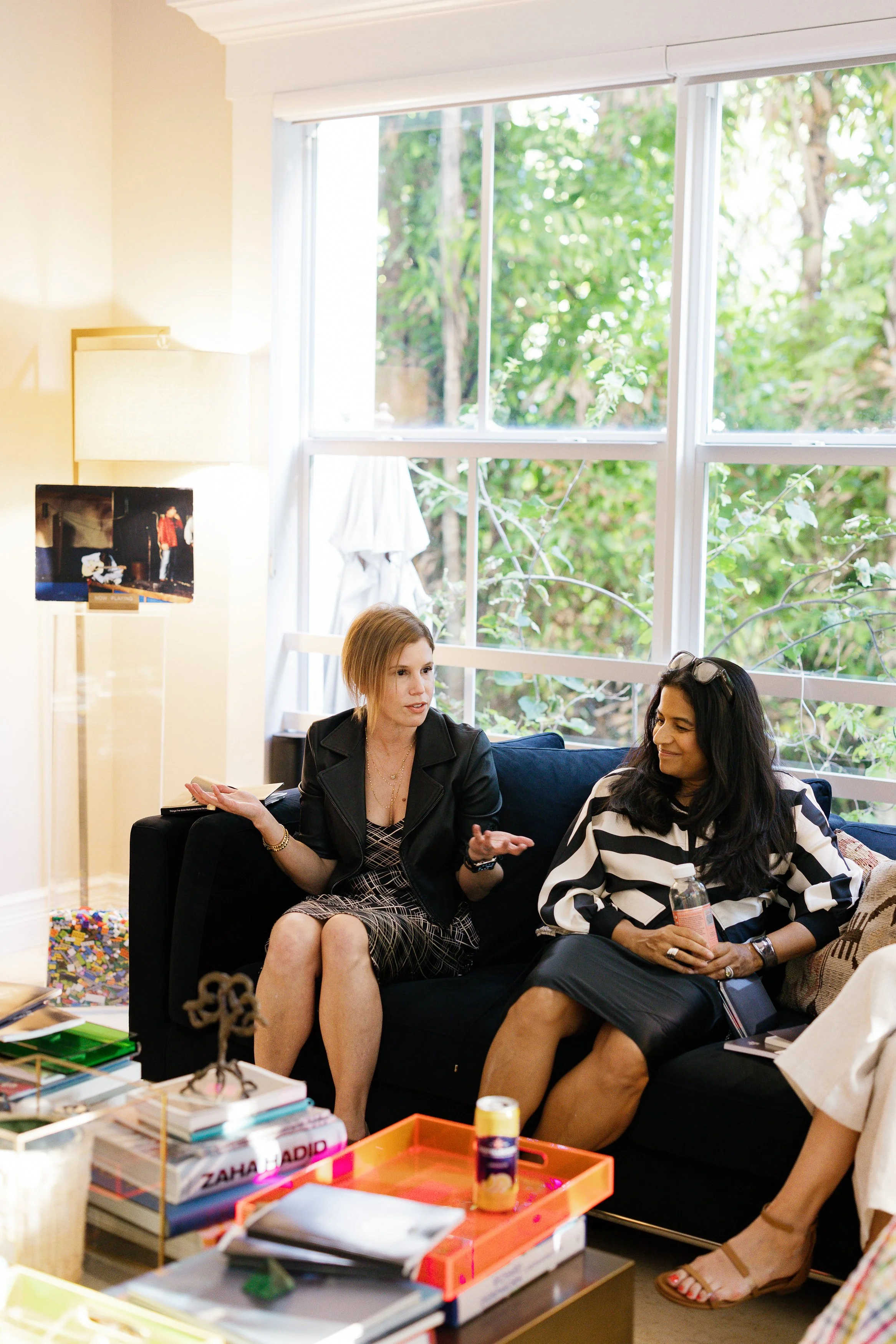
Claudia Amalia Photography
Recently, before a meeting began, I asked a colleague to tell me about the one initiative he’s most lit up about. He got to choose something he was proud of and when he finished, I waited a moment and asked him to say more about it. Then he went straight to telling me about the people doing the work, which is the part no status update ever includes and I wouldn’t have known to ask. I could have said, “I saw you’re working on such-and-such. How’s it going?” But coming from me, that would land as a status check, and he’d be answering a question he hadn’t prepared for. Asking about the grid outage gives someone credit for a thing they already handled and asking how a project is going asks them to account for one that isn’t finished. When you carry weight in the room, curiosity can sound a lot like an inspection.
At work I’m usually after two things. I want to connect, and I want the people around me to feel comfortable raising an idea or a concern. It’s easier to tell someone what isn’t working once they’ve recognized what is, which is why I start with the question that gives credit.
Your name may not be on the company, but you probably carry more weight in some rooms than you realize. It might be your title, the fact that you’re hosting, or simply a commanding presence. In those rooms, you might try a question that gives credit before it asks for anything. With a colleague who just handled a tense client meeting, that could sound like, “You kept that room calm when it got heated. What were you thinking in that moment?”
The same approach works when you’re the nervous one and the weight belongs to someone else. If you run into the CEO at the office, you might skip the story you’re tempted to tell and start with something of theirs. It could be a comment from the last town hall, a podcast you heard them on, or an interview you read in Fast Company. From there you could ask, “What you said about that stayed with me. How did you arrive at it?” It’s a question only that person can answer, and if you’re a nervous talker like me, it gives you something better to do than start a second story. Give the quiet a few seconds and see who walks through. If talking is the hard part for you, Vanessa’s book is a generous place to start, written by someone who learned every piece of it herself.
The sidelines of a track meet or the dinner party are different assignments. There the goal is common ground with someone you may know nothing about, and I’ll pick that up next week.
I still ramble when I’m nervous, and I still hit rewind afterward. I’m an overthinker and a perpetual self-improver. These days the replay includes more of what the other person said.
From Your Biggest Champion,
Nicole
