
Sweet Dreams and Hot Dogs
When I was a kid, my parents took me to Hershey Park and I could not believe that an entire town revolved around chocolate.
The street lamps were shaped like Hershey Kisses. The people who lived there made their living from the factory. There was an amusement park, a tour where you could watch the chocolate being made, and the whole place smelled like the inside of a candy bar. But the part I still carry with me, decades later, is this: before bed, a full-size Hershey bar was left on my pillow with a note that said "Sweet Dreams."
Not a sample. Not a fun-size. A full-size Hershey bar! On my pillow! With two simple words.
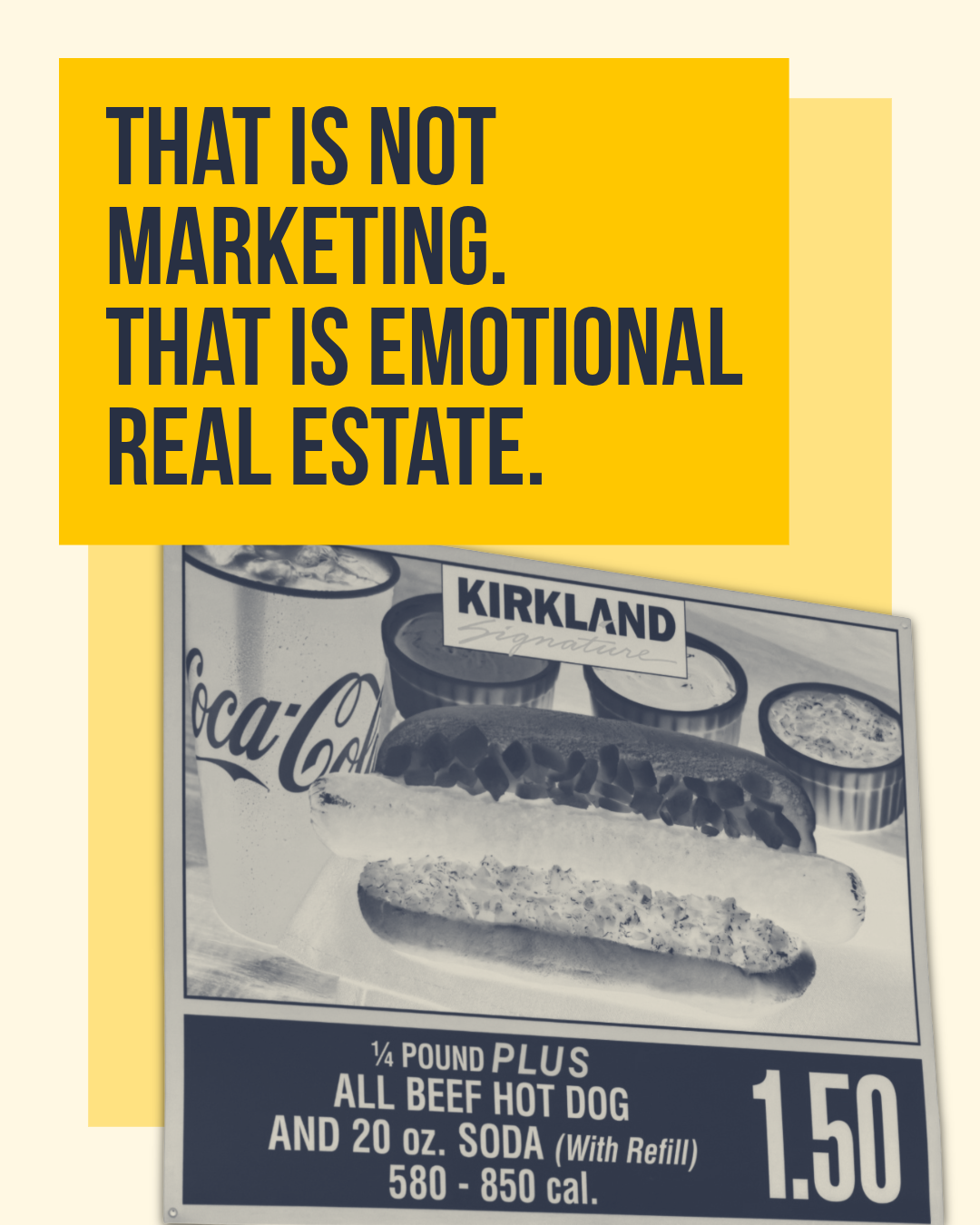
We had stayed at plenty of hotels before that. I had seen the little Andes chocolate mint on a pillow. But this was different. This was a whole town saying everything here is made of something sweet, including the way we send you to sleep. And now, all these years later, Hershey owns those two words in my brain. I cannot say "sweet dreams" without seeing that chocolate bar. That is not marketing. That is emotional real estate. And once a brand owns space in your memory like that, no competitor can outspend them for it.
I have been thinking about this all week because of a hot dog.
This past week, Costco CEO Ron Vachris went viral eating a $1.50 hot dog in one of his own food courts and promising the price will never change. "The price will not change as long as I'm around," he said. No script. No production. Just a guy in a Costco, eating a hot dog, making a promise. The internet lost its mind.
That hot dog combo has been $1.50 since 1985. Forty-one years. When a previous CEO suggested raising the price, co-founder Jim Sinegal reportedly told him: "If you raise the effing hot dog, I will kill you. Figure it out." They figured it out. They switched soda brands instead. And they turned a hot dog into one of the most powerful loyalty tools in retail history.
Hershey and Costco have this in common. Neither of them needed a loyalty program to earn your loyalty. No points, no app, no gamified rewards system. Hershey put a chocolate bar on a child's pillow (although I’m not sure they still do this, but the memory is seared in my brain nonetheless). Costco kept a hot dog at the same price for four decades. And both created the kind of devotion that no algorithm can manufacture.
Last week in The Popsicle Theory, I wrote about the experience economy and the idea that feelings are the new product. A hotel in Cancun won my loyalty for life with a popsicle and a stuffed monkey when my daughter cut her foot. The response to that piece told me that this idea is resonating because people feel it in their own lives. We all have a Hershey bar moment. We all have a Costco hot dog. We all have a brand that owns a little plot of emotional real estate in our memory, not because they spent the most but because they made us feel something at exactly the right time.
The part that should matter to anyone running a business: it is working. Costco's hot dog is a loss leader. It makes no money on its own. But it gets people through the door, and once they are inside, they spend. The hot dog is not the product. The hot dog is the feeling. The feeling is this company is not trying to squeeze every dollar out of me. And that feeling converts to loyalty that no discount code can touch. It’s comfort food customers can count on.
Meanwhile, the rest of the industry is pouring money into loyalty programs that customers barely use. Over half of all loyalty points go unredeemed. People sign up, forget the app exists, and move on. The programs are designed around transactions when what actually creates loyalty is a feeling. Costco understood this forty-one years ago. Most brands still have not caught up.
So what does this mean for you, whatever business you are in?
Find your hot dog. What is the one thing you could offer that costs you very little but tells your customer everything about who you are? It does not have to be big. It has to be consistent and it has to be real. Costco's hot dog says: we are on your side. Hershey's chocolate bar said: we want your dreams to be sweet. What does yours say?
Stop renting attention. Start owning memory. Ads rent space in someone's feed for a few seconds. Experiences own space in someone's brain for decades. The Costco CEO's video got more engagement than most Super Bowl ads this year. It cost nothing to make. Because the story was already built into the brand. You cannot manufacture that in a campaign. You have to earn it over time.
Loyalty is not a program. It is a feeling. If your loyalty strategy lives in an app, you are playing the wrong game. Real loyalty lives in the body. It is the feeling of walking into a place and knowing they are not going to nickel-and-dime you. It is the nostalgia of a chocolate bar on a pillow when you were seven. It is the trust that comes from forty-one years of keeping a promise. No points system in the world can replicate that.
I have spent over two decades filling arenas with feelings. And the longer I sit with this idea, the more I see it everywhere. The brands that are winning right now are not the ones with the biggest budgets. They are the ones that understood something simple a long time ago, if you make someone feel something, they will never forget you. A chocolate bar. A hot dog. A popsicle. The price of entry to owning someone's loyalty might be a lot lower than you think. The cost of not trying is a lot higher than you realize.
From Your Biggest Champion,
Nicole
